The Farm Flour

Where should we deliver?

Your pincode sets your city, cutoff and delivery slots across the site.

Sharbati wheat

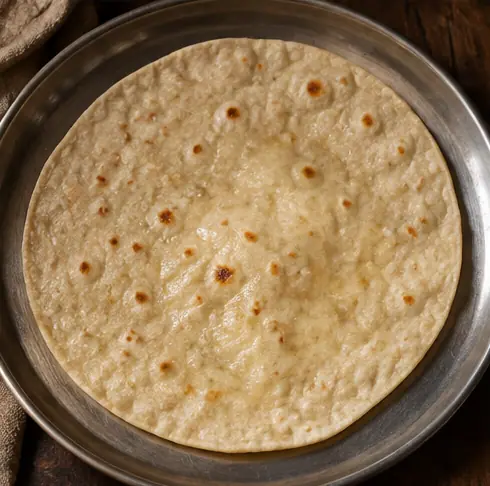
The golden, faintly sweet wheat of Sehore, and the reason our rotis roll so softly.

  • Sharbati gehu (Hindi)
  • Sehore Sharbati
  • Triticum aestivum, bread wheat
  • शरबती गेहूं · షర్బతి గోధుమ · ಶರಬತಿ ಗೋಧಿ
Botanical name
Triticum aestivum (bread wheat)
Known for
Large golden grain, mild sweetness
Grown mainly in
Sehore district and the wider Malwa region, Madhya Pradesh
Season
Winter (rabi)
Gluten
Contains gluten
Flavour
Mild, faintly sweet

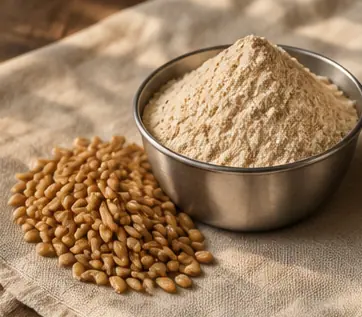
Sharbati is the wheat people mean when they talk about soft, golden rotis. Its plump, amber grains carry a faint natural sweetness, and the flour makes a dough that rolls thin and puffs easily. It is the backbone of most of our blends.

The story of Sharbati wheat

Wheat is one of the oldest crops on earth. It was first farmed in the Fertile Crescent roughly ten thousand years ago, and it was growing on the Indian subcontinent by the time of the Mehrgarh settlements, thousands of years before the first cities of the Indus valley. Today India is among the world's biggest wheat producers, and the grain sits at the centre of the Indian meal, from the daily phulka to the festival puri.

Not all wheat is the same, and Sharbati is the one farmers and cooks single out. It comes from Sehore district in Madhya Pradesh, where it has become so tied to the place that it carries its own Geographical Indication listing. NABARD's GI database says Sehore is the country's largest producer of Sharbati, and that the grain holds slightly more simple sugars, such as sucrose and glucose, than other wheat varieties. That is where the name comes from: sharbat, the sweet drink.

Sharbati is the backbone. It lets everything else roll.

You can see the difference in the grain before it is ever milled. Sharbati kernels are bigger and heavier in the hand than ordinary wheat, with a warm golden colour. In the kitchen that shows up as a flour that takes water well, makes a smooth, soft dough, and gives rotis that stay tender after they cool.

At The Farm Flour, Sharbati is the base we build on. Its strong, stretchy gluten gives other grains something to lean on: ragi, jowar, barley and oats have little or no gluten of their own, so a good share of Sharbati is what lets a multigrain dough roll and puff the way a family expects.
What Sharbati wheat brings to your plate

  • Everyday protein and fibre

    Whole wheat flour typically gives around 10 to 12 g of protein and about 11 g of dietary fibre per 100 g, according to the Indian Food Composition Tables (IFCT 2017). Exact numbers move with the harvest.

  • A strong, stretchy dough

    Wheat is the only everyday Indian grain whose gluten can trap steam, which is why a phulka puffs. Sharbati's gluten is on the strong side, so it carries other flours well.

  • A gentle natural sweetness

    The slightly higher simple-sugar content that NABARD describes gives Sharbati rotis a mild sweetness without anything being added.

  • Whole grain, one ingredient

    Our Sharbati flour is just milled grain. Nothing is added or taken out, so the bran and germ that make whole wheat what it is stay in the flour.

  • Part of the whole-grain advice

    India's ICMR-NIN dietary guidelines (2024) encourage eating more whole grains and millets. A soft wheat base is an easy way to start moving in that direction at home.

Values are typical for the grain, from the Indian Food Composition Tables (IFCT 2017) and published reviews, and vary by variety and harvest. Food information, not medical advice.

Nutrition per 100 g

Typical nutrition per 100 g of Sharbati wheat flour
Energy321 kcal
Protein10.6 g
Carbohydrate64.7 g
Fat1.5 g
Dietary fibre11.2 g
Calcium39 mg
Iron4 mg

Source: draft values pending exact IFCT 2017 figures and nutritionist sign-off. Typical values, vary by harvest. Food information, not medical advice.

Sharbati wheat in your kitchen

How the dough behaves

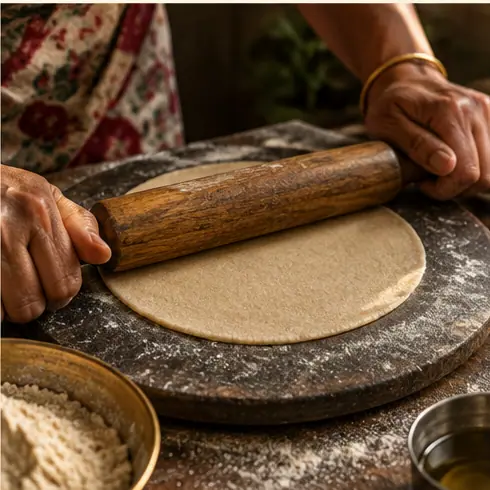
Knead Sharbati flour with warm water into a soft, smooth dough, then rest it for about 15 minutes. It tolerates generous kneading and rolls thin without tearing.

Tips

  • Add the water gradually. Whole wheat keeps absorbing as it rests.
  • Rest the dough under a damp cloth for 15 to 20 minutes.
  • Cook on a hot tawa, then puff directly over the flame.
  • Use it as 50 to 75 percent of any multigrain mix so millets roll easily.

What to cook

  • Phulka and chapati
  • Paratha, plain and stuffed
  • Puri and bhatura
  • Thepla and roti for tiffins

Pairs well with

  • Makki
  • Besan
  • Ragi
  • Jowar
  • Ghee, dal and any sabzi

Storing it

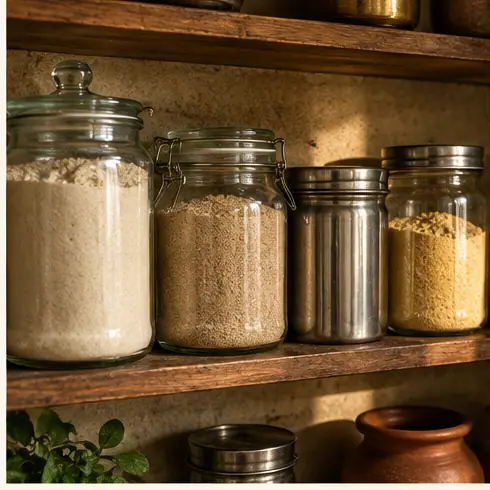
Store in an airtight container in a cool, dark place. Whole-grain flour still has its germ, so it tastes best within a few weeks of milling.

Allergens: contains wheat. Milled on shared equipment that also handles wheat (gluten), barley, oats and chickpea.

Where you will find Sharbati wheat in our flours

  • The Gut Grains

    Whole grains, milled together.

    Available in 1, 2, 5 and 10 kg

    View
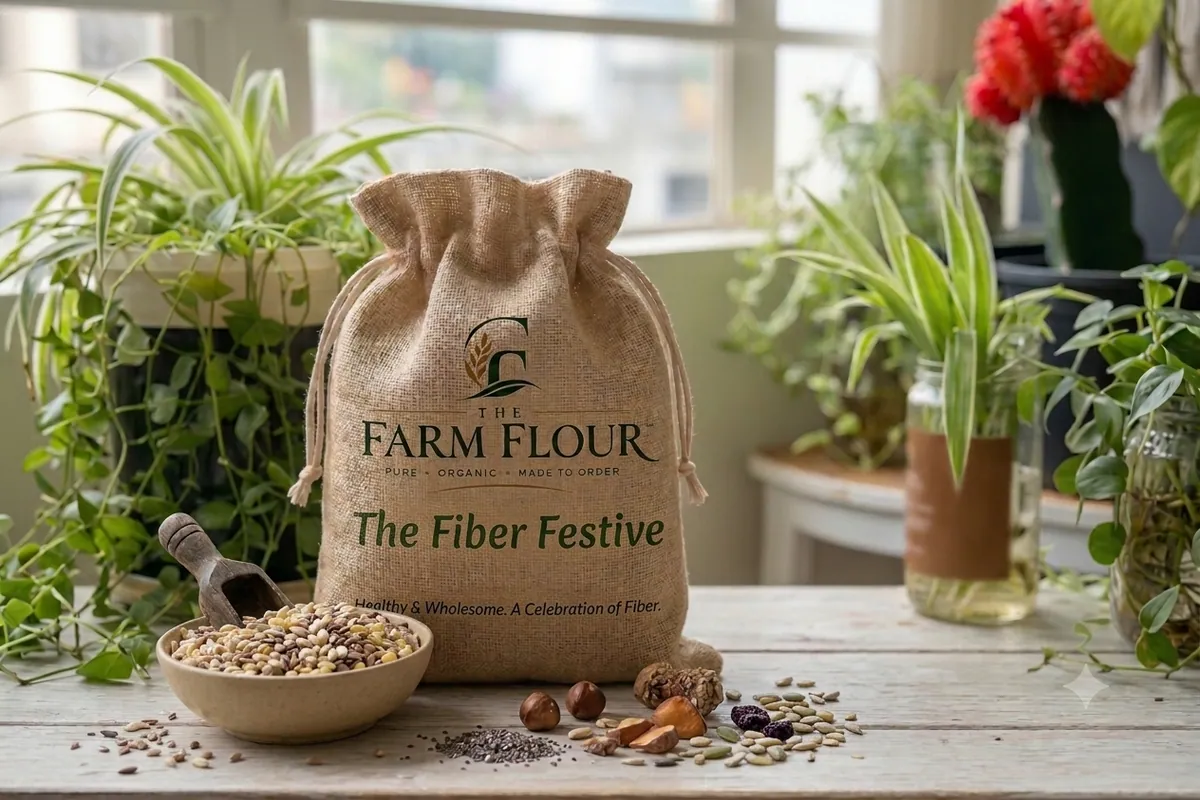
  • The Fibre Festive

    A celebration of grains.

    Available in 1, 2, 5 and 10 kg

    View
  • First Light

    Start the day with more in it.

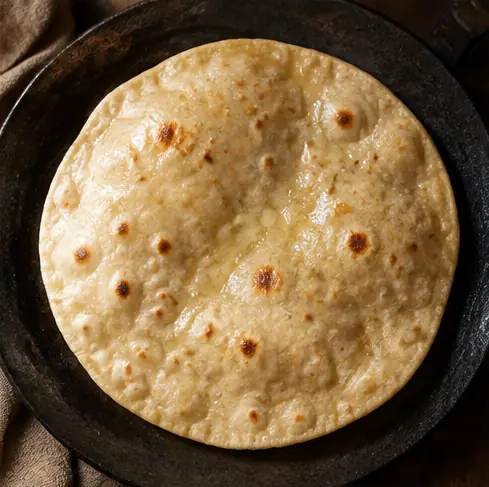
    Rolls like a phulka · 7 g fibre, 6.3 g protein per 2 rotis

    Make it yours
  • Red Earth

    Rich in the old grains.

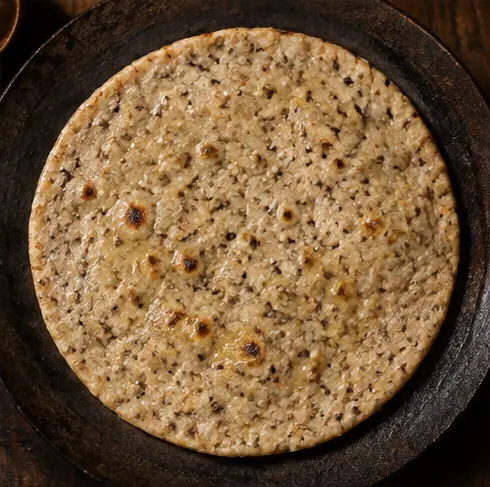
    Rolls like a phulka · 6.9 g fibre, 6.2 g protein per 2 rotis

    Make it yours
  • Easy Evening

    Light, the way dinner should be.

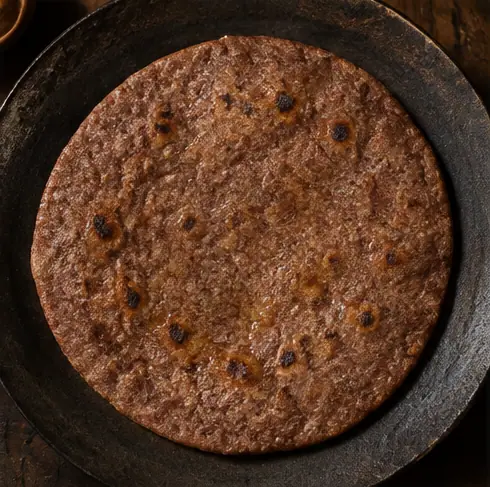
    Rolls like a phulka · 6.6 g fibre, 6.4 g protein per 2 rotis

    Make it yours

Sharbati wheat: your questions

Why is Sharbati wheat called Sharbati?

The name is linked to its slight natural sweetness, like sharbat. NABARD's GI database notes that the grain holds a little more simple sugars than other wheat varieties.

Is Sharbati the same as regular atta?

It is a wheat variety, so it is the same kind of grain, but it is larger, golden and softer to cook with than much everyday atta. Many packets blend several wheat varieties; ours is milled from the grain you choose.

Does Sharbati flour contain gluten?

Yes. Sharbati is wheat and contains gluten. It is not suitable for coeliac disease or a gluten allergy.

Why do my Sharbati rotis stay soft?

A well-hydrated dough, a good rest and a hot tawa keep rotis tender. Sharbati's natural sweetness and strong gluten help it stay soft after cooling.

Can I mix Sharbati with millets?

Yes, and it is the easiest way to begin. Around 50 to 75 percent Sharbati lets ragi, jowar or bajra roll like an ordinary roti.

Sources and further reading

Last updated 23 October 2026. Not yet reviewed by a nutritionist.

From the Journal

Explore other grains

Your cart

The Farmer