The story of Rajgira
Grain amaranth has a double life. In the Americas, amaranth was a staple of the Aztecs and other peoples, grown for its protein-rich seeds and used in food and ceremony. In India, amaranth became ramdana, God's grain, and rajgira, the royal grain: names that show how much the seed was valued. Sanjeev Kapoor's piece on the grain notes that nobody knows for certain how or when it arrived, only that farmers gave it these names.
Because amaranth is a seed and not a true cereal grass, it is permitted during fasts that restrict ordinary grains. That is the reason rajgira flour turns up in kitchens during Navratri, Ekadashi and other vrats, in puris, parathas, rotis, kheer and the sweet ramdana laddoos and chikki sold at roadside stalls. In hill regions such as Uttarakhand, amaranth is still grown by hill farmers, and cooperatives there now sell packaged ramdana laddoos.
Rajgira: small seed, big opinions. Use a little.
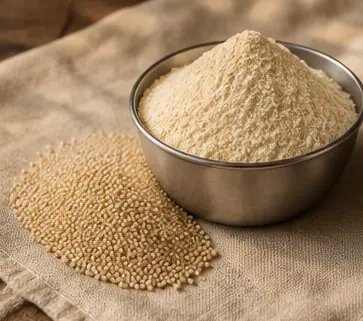
The plant is as handsome as it is useful. Its flower heads glow red, gold and crimson. The English name comes from the Greek amarantos, meaning unfading, a nod to flowers that keep their colour after they are cut. The seeds are tiny, about the size of a poppy seed, and a single plant can produce many thousands.
India's amaranth exports reached record highs in 2022, with the United States, Europe and Japan among the buyers, according to one trade report, a sign that the grain is being rediscovered. In our blends we use it sparingly, 5 to 10 percent, because its flavour is distinctive and a little goes a long way. It is part of The Long Run and The Old Grain.