The Farm Flour

Where should we deliver?

Your pincode sets your city, cutoff and delivery slots across the site.

Oats

A weed that became a breakfast staple: mild, creamy and rich in soluble fibre.

  • Oats
  • Jai or jaee (Hindi)
  • Avena sativa
  • जई · ఓట్స్ · ಓಟ್ಸ್
Botanical name
Avena sativa
Origin
Near East, Fertile Crescent (from a wild oat of wheat and barley fields)
Best suited to
Cool, damp climates
Season
Winter (rabi) in India
Gluten
May carry gluten traces (cross-contact)
Flavour
Very mild, creamy

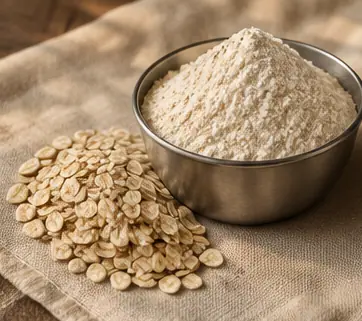
Oats are the gentle grain: mild, creamy and quietly sweet. They began life as a weed in fields of wheat and barley and ended up on breakfast tables around the world. In an atta, a little oat flour makes the roti softer and milder.

The story of Oats

Oats have one of the more unusual origin stories among grains. They are usually treated as a secondary crop: a weed that grew among wheat and barley, and was gradually taken into cultivation. As those two cereals spread west into cooler, wetter lands, the oat weed did well there, and farmers began to keep it. Genetic evidence places the ancestor of cultivated oats, the wild oat Avena sterilis, in the Fertile Crescent of the Near East.

For a long time oats were not respected. The ancient Greeks and Romans knew mainly the wild oat, saw it as a weed in grain fields, and the Roman writer Pliny considered it a threat to barley. Domesticated oats appear relatively late, in Bronze Age Europe, where their tolerance of cool, wet summers made them valuable. They are particularly important in north-western Europe, and oats still turn up in porridge, oatcakes and brose across Scotland and Scandinavia.

Oats make it gentle. Not much else to say.

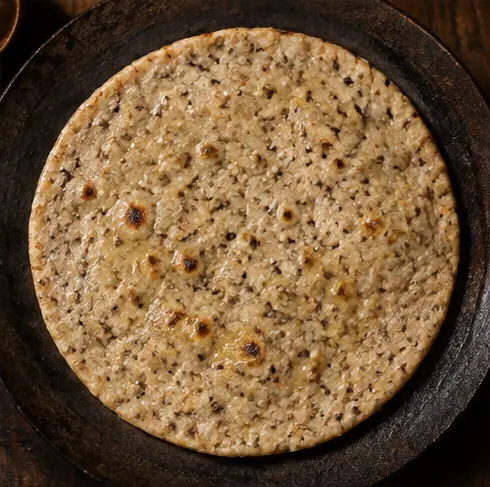
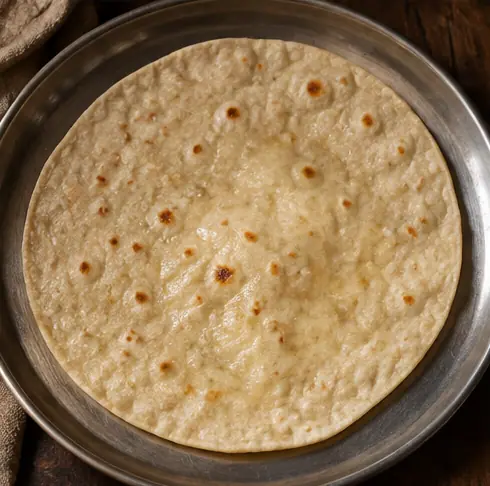
In India, oats are a recent arrival on the plate, and many families first met them as a breakfast porridge. But the grain has a surprising amount to offer a roti. Oat flour is mild and creamy, it soaks up water and softens a dough, and it brings soluble fibre, the same kind of fibre barley is known for.

We use oats in small amounts, around 10 to 15 percent in blends such as First Light and Easy Evening. Beyond 15 percent a dough gets sticky and hard to roll, so a small share is the sweet spot.
What Oats brings to your plate

  • Soluble fibre

    Oats are known for beta-glucan, a soluble fibre. By published values they provide around 10 to 11 g of dietary fibre per 100 g (IFCT 2017 order of magnitude).

  • Protein

    Oats are among the higher-protein cereals, typically around 13 to 14 g per 100 g by published tables.

  • A very mild taste

    The creamy, neutral flavour blends invisibly into a roti, a good way to add grain variety for children.

  • A softer dough

    Oat flour holds water and softens the bite of a roti, so a small share helps rotis stay tender.

  • Traces of gluten

    Oats do not contain wheat gluten themselves, but they are often grown and processed near wheat and barley, so traces are common. We label oats accordingly.

Values are typical for the grain, from the Indian Food Composition Tables (IFCT 2017) and published reviews, and vary by variety and harvest. Food information, not medical advice.

Nutrition per 100 g

Typical nutrition per 100 g of Oats flour
Energy374 kcal
Protein13.6 g
Carbohydrate59 g
Fat7.6 g
Dietary fibre10.8 g
Calcium50 mg
Iron4 mg

Source: draft values pending exact IFCT 2017 figures and nutritionist sign-off. Typical values, vary by harvest. Food information, not medical advice.

Oats in your kitchen

How the dough behaves

Oat flour has no wheat-style gluten, absorbs water readily and makes a soft dough. Keep it to around 15 percent in a roti blend; above that the dough is sticky and hard to roll.

Tips

  • Mix oat flour with wheat flour before adding water.
  • Use slightly less water than usual, since oats soften the dough.
  • A hot tawa and a light dusting of flour keep rolling easy.
  • Use more oats in cheela, pancakes and porridge, where rolling is not needed.

What to cook

  • Oat and wheat rotis
  • Oat cheela and pancakes
  • Oat porridge
  • Oat dosa and idli blends

Pairs well with

  • Sharbati
  • Barley
  • Jowar
  • Jaggery, milk, fruit, nuts

Storing it

Store airtight in a cool, dry place. Oat flour has some natural oils, so use within a few weeks.

Allergens: contains oats. Milled on shared equipment that also handles wheat (gluten), barley, oats and chickpea.

Where you will find Oats in our flours

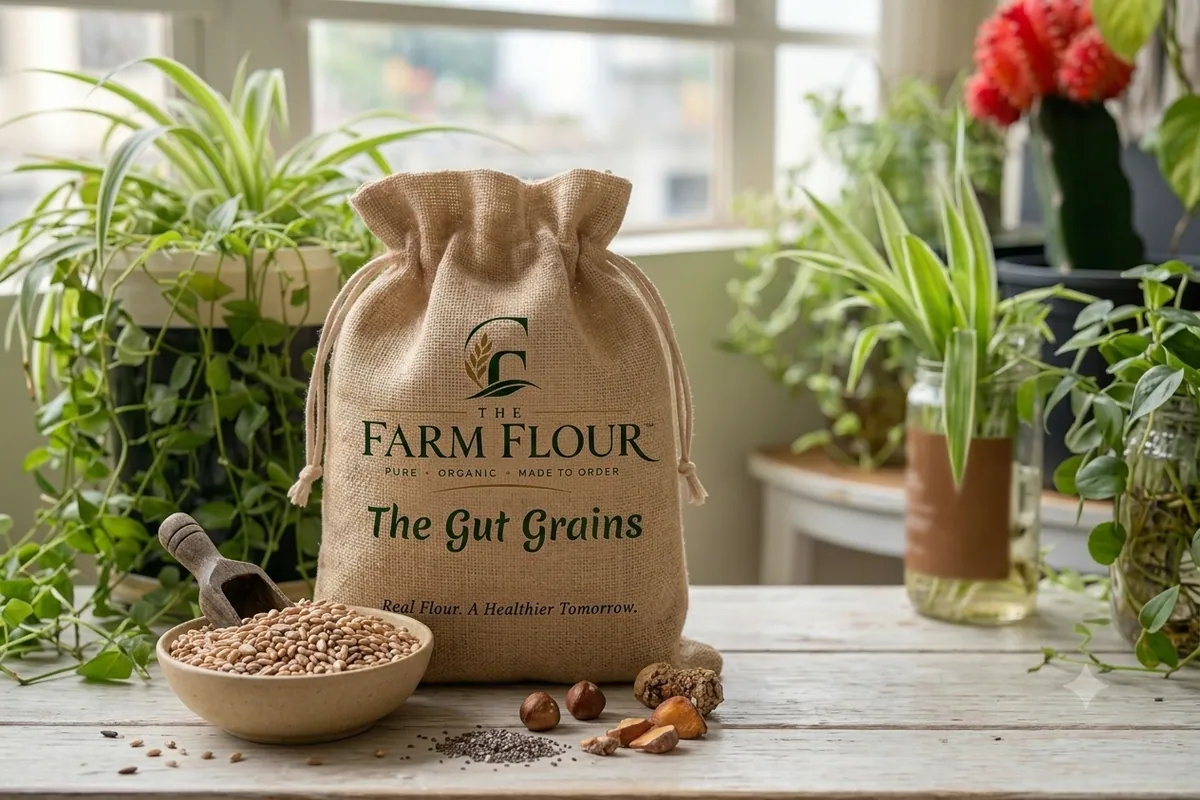
  • The Gut Grains

    Whole grains, milled together.

    Available in 1, 2, 5 and 10 kg

    View
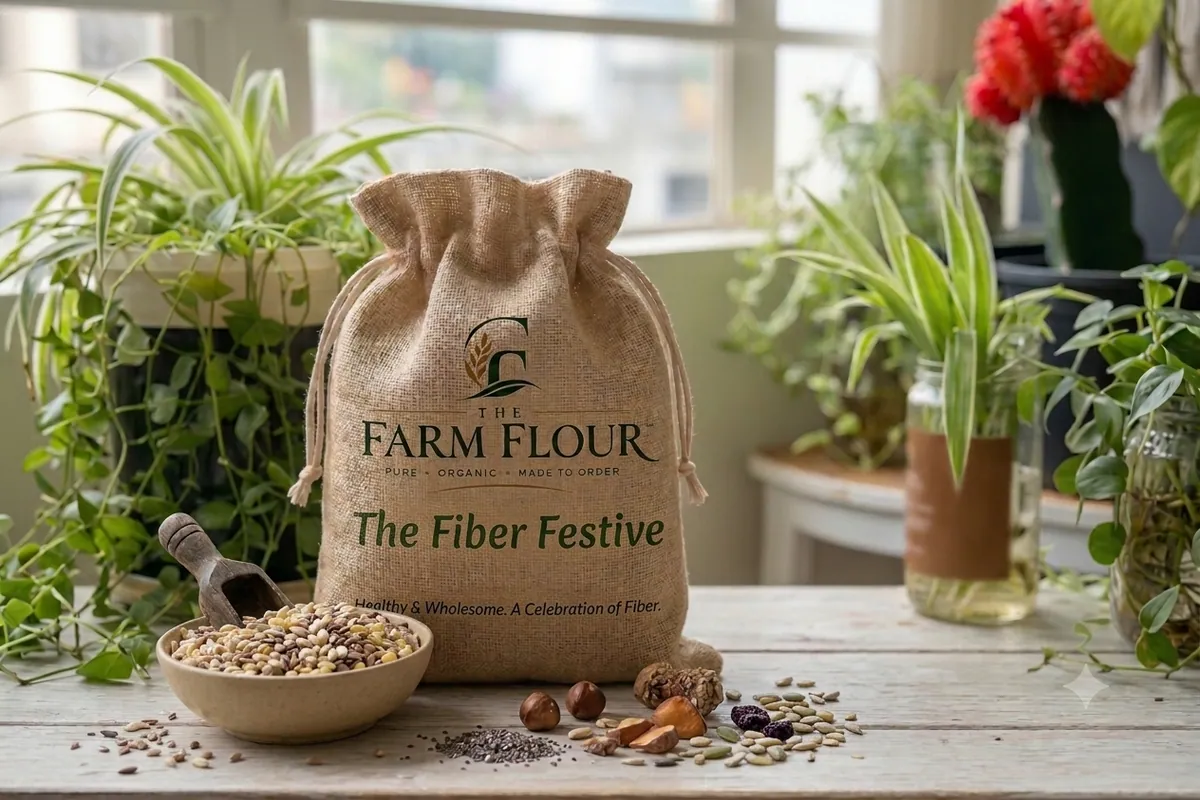
  • The Fibre Festive

    A celebration of grains.

    Available in 1, 2, 5 and 10 kg

    View
  • First Light

    Start the day with more in it.

    Rolls like a phulka · 7 g fibre, 6.3 g protein per 2 rotis

    Make it yours
  • Easy Evening

    Light, the way dinner should be.

    Rolls like a phulka · 6.6 g fibre, 6.4 g protein per 2 rotis

    Make it yours

Oats: your questions

Is oats the same as jai?

Yes. Jai (जई) is the Hindi name for oats (Avena sativa).

Does oat flour contain gluten?

Oats do not contain wheat gluten but may carry gluten traces from growing and processing near wheat and barley. We mill on shared equipment, so we do not recommend our flours for coeliac disease or a gluten allergy.

What is beta-glucan?

A soluble fibre found in oats and barley. It is part of what gives oats their creamy texture.

How much oat flour can I add to roti?

About 10 to 15 percent of the total flour. Beyond that the dough turns sticky and hard to roll.

Why were oats once considered a weed?

Oats first grew as weeds among wheat and barley, and the Greeks and Romans regarded them that way. They were only later cultivated, mainly in cool, damp climates.

Sources and further reading

Last updated 23 October 2026. Not yet reviewed by a nutritionist.

Explore other grains

Your cart

The Farmer