The story of Ragi
Ragi was first cultivated in the highlands of East Africa. Most sources point to Ethiopia and Uganda, and genetic studies find greater diversity in African collections than in Indian ones, which supports an African origin with India as a second home for the crop. Estimates differ on when it reached the subcontinent, with figures from around 4,000 to 5,000 years ago, with some accounts linking it to Harappan-era sites.
Wherever it landed, ragi proved tough. Reviews describe finger millet as a crop that needs few inputs and tolerates drought, which suits semi-arid and rain-fed land. In India it found its centre in Karnataka and the old Mysore region, where ragi is not a health food but simply the everyday meal.
A little ragi goes a long way.
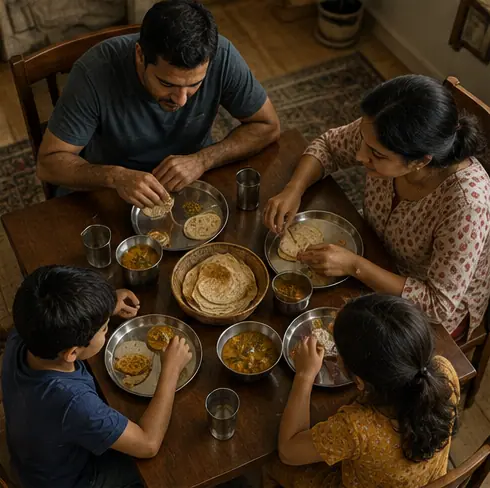
That meal is ragi mudde: flour stirred into boiling water until it comes together, shaped into soft balls and eaten with a spicy saaru or sambar. The word mudde means lump or dough. In southern Karnataka it is eaten almost daily, and it has been a mainstay of farming households for as long as anyone can say. Ragi malt, ambali, dosa, roti and porridge follow the same tradition across southern India, and nachni satva and papad have a following in Maharashtra.
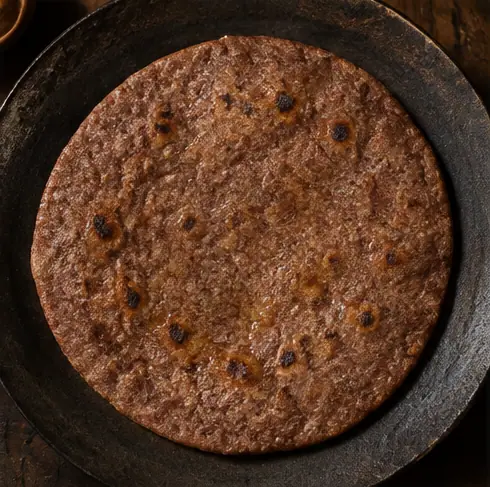
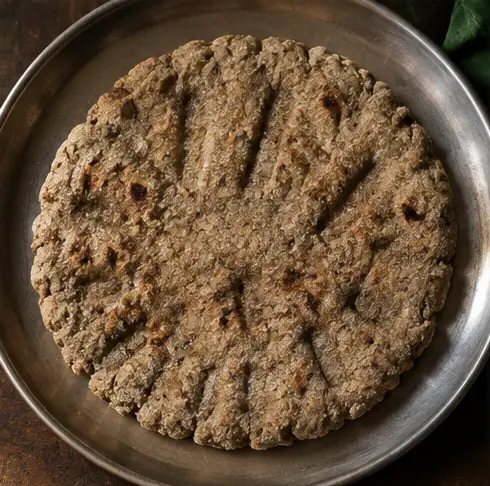
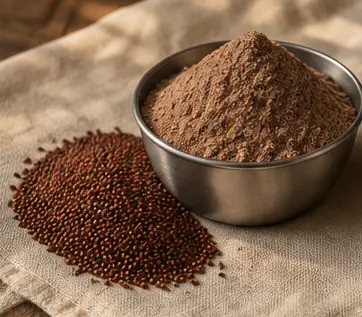
Ragi's reddish-brown colour is a signature, and it is why a little ragi darkens the flour so beautifully. It is also the reason ragi cracks in rotis: with no gluten, it needs wheat or careful handling to hold together. In our blends it shows up from 10 to 25 percent, enough to give colour, flavour and nutrition without the cracking.