The story of Khapli
Long before there was Sharbati or Lokwan, there was emmer. Farmers in the Fertile Crescent domesticated it around ten thousand years ago, and it was one of the founding crops of agriculture. For thousands of years it was a staple across the ancient world.
It arrived in India very early. Mongabay India's reporting cites a Neolithic find at Mehrgarh, dated to roughly 6000 to 5000 BCE, and archaeological records of khapli at Kunal in Haryana, Kanishkapura in Kashmir and Rohira in Punjab. The botanist A.B. Damania, in a study of emmer in India, writes that it has been grown commercially on the subcontinent since ancient times.
Khapli is the old wheat with the nutty manners.
Then the modern wheats arrived. They matured faster and were easier to harvest and thresh, and khapli slipped to about one percent of India's wheat. It survived in pockets: Karnataka, Maharashtra, coastal Gujarat, Tamil Nadu and Andhra Pradesh. Jalgaon district in Maharashtra, with roughly 1,500 acres, has become something of a hub for the crop.
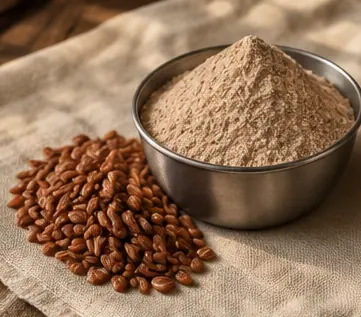
Khapli is a hulled wheat. Every grain stays wrapped in a tough husk that has to be removed before milling, and the crop needs about five months in the field. The husk has an upside: farmers say it protects the grain from pests and helps it keep. That toughness is also why interest is growing again, as farmers look for hardy crops that cope with dry spells.
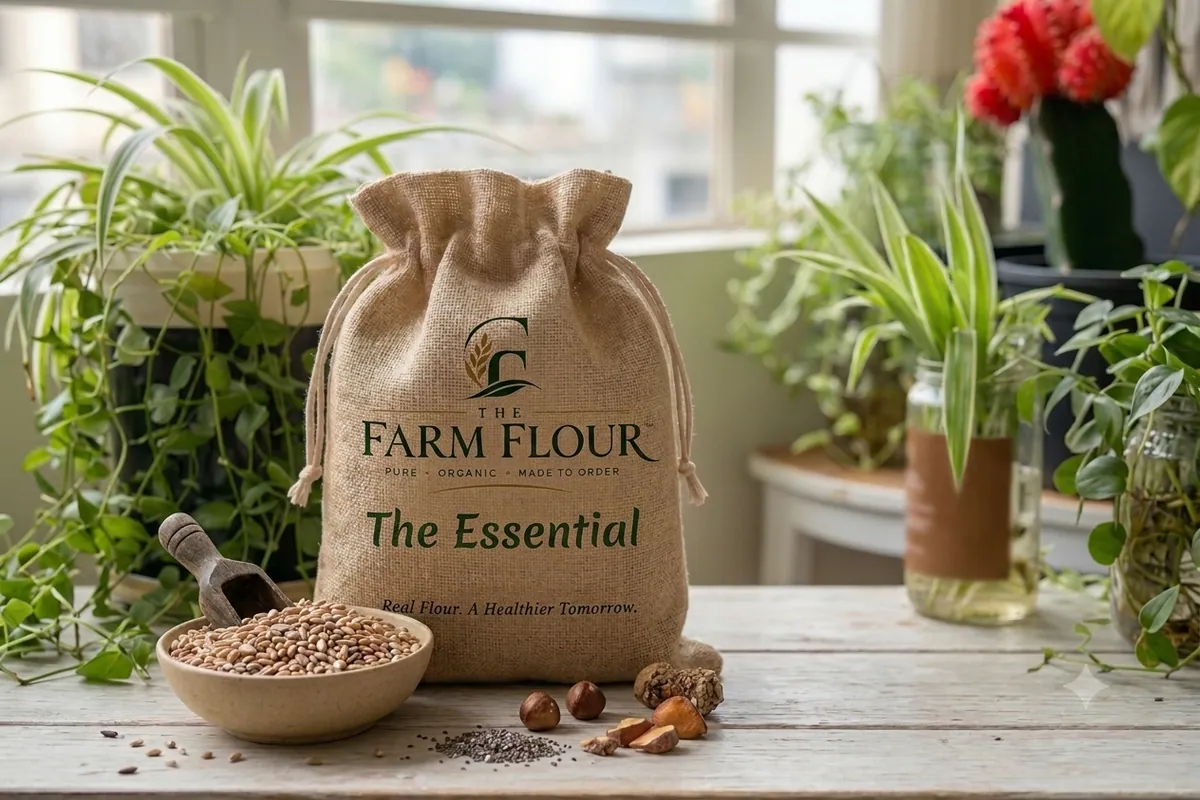
In our kitchen we use khapli where its nutty taste matters most. It is 40 percent of The Long Run, and a quarter of The Essential.